Year: 2018 (page 2 of 3)

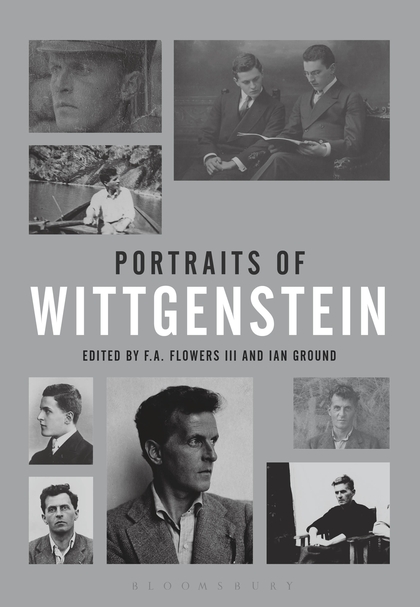
“Portraits of Wittgenstein” Now in Paperback

Portraits of Wittgenstein is a major collection of memoirs and reflections on one of the most influential and yet elusive personalities in the history of modern philosophy, Ludwig Wittgenstein. Featuring a wealth of illuminating and profound insights into Wittgenstein’s extraordinary life, this unique collection reveals Wittgenstein’s character and power of personality more vividly and comprehensively than ever before.

With portraits from more than 50 figures, Portraits of Wittgenstein brings together the personal recollections of philosophers, students, friends and acquaintances, including Bertrand Russell, G. E. Moore, F. R. Leavis, A. J. Ayer, Karl Popper, Friedrich von Hayek, G. H. von Wright, Freeman Dyson, Iris Murdoch, Mary Midgley and Mary Warnock. These authors testify to the life-long influence Wittgenstein had on the lives of those he met. Their fascinating memoirs, reflections and commentaries, often at odds with each other, reveal Wittgenstein’s kindness, and how much genuine friendship meant to him, as well as his suffering and despair. They show too how the philosopher’s ruthless honesty and uncompromising integrity often resulted in stern advice and harsh rebukes to friends and foes alike.

Now abridged and available in paperback, this collection of valuable and hard-to-find material is an indispensable resource for scholars and students of the life and work of Ludwig Wittgenstein

Preview here
https://bloomsburycp3.codemantra.com/viewer/5b5b0613713c090001358d40

https://www.bloomsbury.com/uk/portraits-of-wittgenstein-9781350046634/

CONFERENCE – CALL FOR PAPERS Wittgenstein: Beyond the Inner–Outer Picture

CONFERENCE – CALL FOR PAPERS

Wittgenstein: Beyond the Inner–Outer Picture

Seville, 12-14thDecember, 2018

In spite of Wittgenstein’s well known critique of its application to the problems of other minds and self-knowledge, the philosophical picture of the relation between the inner and the outer continues to exercise philosophers from the analytic and non-analytic European traditions. The conference Wittgenstein: Beyond the Inner–Outer Picture, to be held at the Faculty of Philosophy of the University of Seville, on December 12th– 14th2018, will bring together prestigious academics and early career researchers working on the impact of Wittgenstein’s later philosophy of psychology on areas including epistemology, aesthetics, ethics and cultural studies. The conference aims to find ways of overcoming the picture of the inner and the outer in contemporary philosophical debates, such as those on intercultural understanding, the meaning of a work of art, the legitimacy of testimony as a source of knowledge, and feminism.

Invited speakers:

Josep Corbí (Universitat de València)

Alfonso García Suárez (Universidad de Oviedo)
Modesto Gómez Alonso (University of Edinburgh)
Michel ter Hark (Vrije Universiteit Amsterdam)

António Marques (Universidade Nova de Lisboa)
Elise Marrou (Université Paris-Sorbonne, Paris IV)
Sofia Miguens (Universidade do Porto)
David Pérez Chico (Universidad de Zaragoza)
Manuel de Pinedo (Universidad de Granada)
Neftalí Villanueva (Universidad de Granada)


Organizing committee: Carla Carmona (University of Seville), Jesús Navarro (University of Seville), Chon Tejedor (University of Valencia).

Scientific committee: Ángeles Jiménez Perona (Complutense University of Madrid), Óscar González Castán (Complutense University of Madrid), Nicolás Sánchez Durá (University of Valencia), Manuel Heras (University of the Basque Country).

Financed by:VI Plan Propio de Investigación y Transferencia de la Universidad de Sevilla; Department of Metaphysics, Contemporary Philosophy, Ethics and Political Philosophy of the University of Seville; the research projects “Self-Knowledge, Moral Responsibility, and Authenticity” (FFI2016-75323-P) and “The Constitution of the Subject in Social Interaction” (FFI2015-67569-C2-1-P) funded by the Ministerio de Economía y Competitividad.     With the collaboration of the Wittgenstein Initiative.


CALL FOR PAPERSPlease send your final text (max 4000 words) or a comprehensive summary (2000 words) plus a 100-word abstract by September 15th 2018to: carlacarmonaescalera@gmail.com. Papers will be accepted in English, Spanish or Portuguese. If you submit in Spanish or Portuguese, please include a 300-word abstract in English. All submissions to be formatted for blind review, including contact details on a separate page. Communication of acceptance: October 1st, 2018.

Wittgenstein-Forum der ILWG / Mitgliederversammlung 2018

Liebe Mitglieder der Internationalen Ludwig Wittgenstein Gesellschaft,
hiermit lade ich Sie herzlich zum 5. Wittgenstein-Forum unserer Gesellschaft ein, das am 27./28. Oktober d.J. unter der wissenschaftlichen Leitung von Richard Raatzsch an der EBS Universität für Wirtschaft und Recht in Östrich-Winkel stattfinden wird. Das Thema des Forums lautet:
… und schreib getrost: “Im Anfang war die Tat.” – Wittgenstein über das Psychische
Das geplante, für Sie hoffentlich interessante Programm hänge ich meiner Email an.
Im Anschluss an die Tagung, am 28. Oktober 2018, um 16:30 h, wird die nächste Mitgliederversammlung unserer Gesellschaft stattfinden, zu der ich Ihnen ebenfalls eine Einladung anhänge.
Ich würde mich freuen, viele von Ihnen im Oktober in Östrich-Winkel persönlich zu treffen, und bleibe bis dahin
mit herzlichen Grüßen,
Ihr Stefan Majetschak

Internationale Ludwig Wittgenstein
Gesellschaft (ILWG) e.V.

Prof. Dr. Stefan Majetschak
Universität Kassel
Menzelstraße 13–15
D-34121 Kassel

+49 561 804 5328
www.ilwg.eu

CFP: Wittgenstein: language, practical knowledge and embodiment

Call for papers – Rivista Italiana di Filosofia del Linguaggio www.rifl.unical.it

Vol. 12, N. 2/2018: Wittgenstein: language, practical knowledge and embodiment

Edited by Annalisa Coliva

Deadline: 30.06.2018

This special issue of RIFL is devoted to the re-contextualization of Wittgenstein’s ideas regarding the nature of our linguistic competence and abilities at large, in the light of recent developments in the philosophy of mind, such as the raise of the enactivist program (Hutto, Myin, Noë) and the development of a usage-based theory of language acquisition (Tomasello). Central to these approaches is the idea, proposed by Wittgenstein in On Certainty, that at the bottom of our language games is a practice (“In the beginning it was the deed”, writes Wittgenstein in On Certainty, quoting Goethe). Some interpreters, have taken this to mean that our basic certainties, on which our language games hinge, are ultimately non-propositional, but enacted in our everyday practices. The implications of these ideas for our understanding of language, language acquisition, and other human abilities, such as for instance reading, are enormous. In particular, these ideas have been taken as a start for a thorough anti-representationalist program, in the philosophy of mind, but also in linguistics and in developmental psychology, capable of challenging dominant views in each of these areas, championed, for instance, by Fodor in the philosophy of mind, by Chomsky in linguistics and by Gopnik in developmental psychology. At the same time, this topic connects with reflections at the interface between epistemology, the philosophy of language and the philosophy of mind, regarding the nature of these abilities. Namely, if they have to be considered, ultimately, as specimens of propositional knowledge, as Chomsky and more recently Williamson and Stanley have maintained, or whether they are irreducibly practical, as Ryle and Wittgenstein, as well as enactivists nowadays maintain.

We invite contributions on the following topics:

  • the nature of linguistic competence;

  • practical vs propositional knowledge;

  • abilities and skills;

  • reading;

  • situated and embodied cognition;

  • action and perception;

  • memory;

  • the later Wittgenstein’s conception of linguistic abilities.

Submissions may be in English, French, Italian and Spanish. Abstract in English of no more than 250 words is required for all manuscripts submitted. Each manuscript should have title and 5 keywords in English. Submissions must be prepared for blind review. The author’s name, the institutional affiliation and the title’s paper must be placed in a separate file. Manuscripts must be sent as Microsoft Word file (.doc or .rtf) to: segreteria.rifl@gmail.com

Instructions for authors:

Max length:
40000 characters (including spaces) for articles (including the references) and reviews;
20000 characters (including spaces) for interviews;
10000 characters (including spaces) for specific paper review.

Submission deadline: June 30, 2018
Issue publication: December 2018

Special Issue: PROCEEDINGS OF THE BRITISH WITTGENSTEIN SOCIETY 10TH ANNIVERSARY CONFERENCE: WITTGENSTEIN IN THE 21ST CENTURY

The Proceedings of the BWS 10th anniversary conference on *Wittgenstein in the 21st century* are now available

http://onlinelibrary.wiley.com/doi/10.1111/phin.2018.41.issue-2/issuetoc
Papers by

Louise Barrett on primatology,

Michel Bitbol on mathematics & physics,

Peter Hacker on the private language argument,

Daniel D. Hutto & Glenda Satne on philosophy and science,

Sandra Laugier on the social,

Paul Standish on philosophy of education, and

Constantine Sandisin conversation with Richard Harry Robert Harper on Wittgenstein and information technology.

Wittgenstein: Grammar and Nature

Workshop

Wittgenstein: Grammar and Nature

University of Southampton, Monday 9th July 2018, Highfield Campus, Building 44, Room 1057


Registration deadline: Monday 25th June


About the Event

Wittgenstein’s concept of grammar is agreed to be crucial to his later philosophy and philosophical method, but there has been much controversy about the meaning of this concept and what form a grammatical enquiry can, and should, take. How are we to understand this crucial concept, and how (if at all) can grammatical enquiry solve, or dissolve, philosophical problems and confusions? And how does the notion of grammar relate to Wittgenstein’s overall view of philosophy and philosophical method?

A leading approach to these issues gives central place to the “rules of grammar” governing our ordinary language-games. Some of the questions this approach raises include: do these “rules of grammar” merely describe actual language-use or do they carry some sort of prescriptive power? Wherein lies the authority (if any) of these rules? Are they “arbitrary”, and if so, in what sense?

In addressing these and related questions, the later Wittgenstein seems sometimes to appeal to “very general facts of nature”. Thus the “importance” – and perhaps, therefore, authority – of certain linguistic rules might be understood through their “correspondence” (in some sense) with some such facts. If we take this option, however, questions arise about how this fits with the grammatical approach. What role might facts of nature have in a grammatical investigation? Or does this option take us beyond the limits of pure grammatical enquiry?


Preliminary Schedule


09:30-10:15 Registration, tea and coffee
10:15-11:45 Oskari Kuusela (East Anglia): ‘Logic, grammar, and natural history’
11:45-12:00 Break, tea and coffee
12:00-13:30 Danièle Moyal-Sharrock (Hertfordshire): ‘Wittgenstein’s reality-soaked grammar’
13:30-14:45 Lunch
14:45-16:15 Rachael Wiseman (Liverpool): ‘General facts of nature and acting under a description’

16:15-16:30 Break, tea and coffee

16:30-18:00 Constantine Sandis (Hertfordshire): ‘No picnic: Cavell on rule-descriptions’
18:30 Dinner


Each talk will be followed by a short response by a graduate student and a discussion.

A call for respondents will be sent out soon.


Organisers:

Felix Hagenström foh1u12@soton.ac.uk

Fionn O’Donovan F.B.O’Donovan@soton.ac.uk

Tim Kjeldsen tim.kjeldsen@gmail.com


Registration is free and lunch will be provided on the day, so please state in your email whether you have any dietary requirements. Please also state whether you would like to attend dinner in the evening (this will be at your own expense). Attendance is open to all, but numbers are limited. The deadline to register is 25th June.


This workshop is organised in accordance with the BPA/SWIP good practice scheme.


To register to attend and for further information contact Felix Hagenström at foh1u12@soton.ac.uk


More detailed information to be circulated soon.


‘Perspectives on Wittgenstein’, BPA 30/2017


Guest editors: James R. Connelly, Andrej Jandrić, Ljiljana Radenović

MEANING AND METHOD
Hans-Johann Glock

TRIANGULATION AND THE PRIVATE LANGUAGE ARGUMENT
Arif Ahmed

WITTGENSTEIN’S ‘TREATMENT OF PSYCHOLOGICAL CONCEPTS’ AND ITS PHILOSOPHICAL SIGNIFICANCE
Leon Kojen

ON SOME STANDARD OBJECTIONS TO MATHEMATICAL CONVENTIONALISM
Severin Schroeder

PICTURES, MODELS, AND MEASURES
S.G. Sterrett

ONTOLOGY AND SEMANTICS: AN ANTI-REALISTIC READING OF THE TRACTATUS
Pasquale Frascolla

ON WITTGENSTEIN’S TRANSCENDENTAL DEDUCTIONS
James Russell Connelly

WILLIAM JAMES ON CONCEPTIONS AND PRIVATE LANGUAGE
Henry Jackman

WITTGENSTEIN AND PRAGMATISM REVISITED
Russell B. Goodman

WITTGENSTEIN’S ‘IMPOSSIBLE’ COLORS: TRANSPARENT WHITES AND LUMINOUS GRAYS
Dejan Todorović

REFLECTIONS ON EDITING MOORE’S NOTES IN WITTGENSTEIN: LECTURES, CAMBRIDGE 1930-1933
David G. Stern

RELIGIOUS HINGE COMMITMENTS: DEVELOPING WITTGENSTEINIAN QUASI-FIDEISM
Ljiljana Radenović, Slaviša Kostićhttp://www.f.bg.ac.rs/bpa/read-online.html

Review of “The Soul of Wittgenstein”

It is a rare event that a philosopher who is not also a polymath becomes the focus of cultural celebration. Wittgenstein is, perhaps, unique insofar as he has garnered a degree of public attention and, on occasion, discipleship that is not always answerable to an awareness of the nature of his thought (or, indeed, any of his other achievements). His Tractatus Logico-Philosophicus, for example, is appreciated as much by logicians and philosophers as it is by mystics, and is further viewed by some as a work of literary merit independent of its philosophical significance.

Ron Elisha’s Play The Soul of Wittgenstein – on at the Clapham Omnibus Theatre until the 25th February – can be seen as paying homage to both the man, Ludwig Wittgenstein, and his work in many of the ways in which they have found appreciation.

Although the action is set in Guy’s Hospital during the Second World War with Wittgenstein working as a hospital porter (he did indeed work in such a capacity during this time), the plot is largely apocryphal and the character of Wittgenstein subject to a degree of artistic license (although not to the point of being unrecognizable). There is however, an integrity to the script which allows one to suspend concerns about biographical accuracy; indeed, The Soul of Wittgenstein is a rather beautiful play – moving without being sentimental – and is brought to life by what is obviously inspired direction and acting.

Terminally ill, bed-ridden and illiterate cockney, John Smith, meets Ludwig Wittgenstein (who has given himself a pseudonym to protect his anonymity) in his capacity as a hospital porter; Wittgenstein is initially puzzled by Smith’s illiteracy and further frustrated by his apparent lack of curiosity. Over the following days and (I assume) weeks, a relationship blossoms between them that is largely centred on Wittgenstein teaching Smith to read, and Smith’s ever increasing degree of curiosity. There are echoes of Wittgenstein’s relationship with David Pinsent alongside invitations to see the development of his thought as nurtured through his teaching of Smith.

Eventually it becomes apparent that the relationship between Wittgenstein and Smith has developed into one of love, although it remains an open question as to whether it is (or could have been) overtly sexual.  Wittgenstein comes to understand that to talk of, and teach the meaning of the word love, is to take part in a form of life that determines the nature of the relevant features we accord to it, as opposed to being a word that requires a strict definition (an idea that it is made plain he believes at the start). It is this that he learns from Smith and one of many aspects of the play than can be seen as truthful to the spirit of Wittgenstein as a human being, in spite of not being biographically accurate.

Provided one does not approach the production from a perspective in which biographical accuracy is all that matters, one will find in it a moving and, ultimately, very sensitive depiction and expression of humanity.


Adrian Brockless

BWS Editor