A panel discussion for the general public about the young Wittgenstein
A panel discussion for the general public about the young Wittgenstein
Gregynog Hall, Friday 4th – Sunday 6th May 2018
54th Session: Programme
Friday, 4th May
4 p.m. Tea
4.30 pm Postgraduate paper: Rhianwen Daniel (Cardiff), ‘Appropriating Wittgenstein for Linguistic Nationalism’
7.00 p.m. Dinner
8.00 p.m. Hugh Knott (Anglesey) will introduce a discussion of Dick Beardsmore’s ‘Learning from a novel’
Saturday, 5th May
8 a.m. Breakfast
10 a.m. Hans Fink (Aarhus), ‘On Løgstrup on Trust’
11 a.m. Coffee, followed by discussion of paper
12.30 p.m. Short business meeting
1 p.m. Lunch
4 p.m. Tea
4.30 p.m. Toby Betenson (Bangor), ‘Sense and Sensitivity: Referents for the Moral Law’
7.00 p.m. Dinner
Sunday, 6th May
8 a.m. Breakfast
9.15 a.m. Annual Wittgenstein Lecture: Ian Ground (Hertfordshire and Newcastle), ‘Ensonification: Reflections’
10.15 a.m. Coffee & Discussion
11.45 a.m. Departure
The conference is sponsored by generous contributions from the British Wittgenstein Society and University of Wales Trinity St David.
If you would like to attend the meeting please complete and return the form below electronically, and send the requisite payment. The deadline for registration is Wednesday 31st January. While it may well be possible to register after this date, it cannot be guaranteed.
The registration fee covers full bed and board from afternoon tea on Friday to morning coffee on Sunday. If you do not fall clearly into any of the three categories listed below, if you will be coming for less than the full period, or if you are a postgraduate from outside Wales, please contact David Cockburn before making payment. It may be possible to make limited adjustments to rates to reflect individual circumstances. Please note that if you have to cancel, refund will be possible only if your place can be filled.
If you have any questions, about travel or anything else, please contact David Cockburn. If you are coming by train your station is Newtown (Powys). (David will try to coordinate transport from the station.)
David Cockburn, University of Wales Trinity St David
cockburn.david@gmail.com
Registration Form
Please complete and return a copy of this form electronically by Wednesday 31st January. At the same time, either put a cheque in the post or pay through internet banking: Welsh Philosophical Society, 40-27-01, 21296280. Give your surname as the reference. (Cheques, payable to ‘Welsh Philosophical Society’, should be sent to: David Cockburn, Department of Philosophy, University of Wales Trinity St David, Lampeter, Ceredigion SA48 7ED) All reservations must be accompanied by payment!
Name: …………………………………………………………
e-mail address: ………………………………………………
Postgraduate [Wales] (£ 80): ……. Staff: (£ 185): ….. Retired (£ 170): ………
Paid by (i) internet …. (ii) cheque …..
Dietary Requirements: Vegetarian…….Vegan …… Other …….
41st INTERNATIONAL WITTGENSTEIN SYMPOSIUM 2018
Kirchberg am Wechsel, Austria, 5th – 11th of August 2018
PHILOSOPHY OF LOGIC AND MATHEMATICS
Scientific Organizers:
Gabriele Mras (Vienna)
Paul Weingartner (Salzburg)
Bernhard Ritter (Klagenfurt)
SECTIONS:
WORKSHOP 1: Wittgenstein on the Philosophy of Mathematics,
1937–1939: The Projected Early Version of PI.” – with Joachim Schulte
WORKSHOP 2: Logical Paradoxes – with Hannes Leitgeb
LIST OF CONFIRMED SPEAKERS:
Matthias Baaz (Vienna)
Francesco Berto (Amsterdam)
Jean-Yves Béziau (Rio de Janeiro)
Günther Eder (Vienna)
Susan Edwards-McKie (Cambridge)
Oliver Feldmann (Vienna)
Juliet Floyd (Boston)
Pasquale Frascolla (Potenza, Basilicata)
Volker Halbach (Oxford)
Richard Heinrich (Vienna)
Wolfgang Kienzler (Jena)
Sandra Lapointe (Hamilton, Ontario)
Hannes Leitgeb (Munich)
Bernard Linsky (Edmonton, Alberta)
Itala Maria Loffredo D’Ottaviano (Campinas)
Paolo Mancosu (Berkeley)
Mathieu Marion (Montréal)
Felix Mühlhölzer (Göttingen)
Julien Murzi (Salzburg)
Michael Potter (Cambridge)
Christoph C. Pfisterer (Zurich)
Richard Raatzsch (Wiesbaden)
Esther Ramharter (Vienna)
Štefan Riegelnik (Zurich)
Georg Schiemer (Munich)
Joachim Schulte (Zurich)
Dana Scott (Pittsburgh)
Stewart Shapiro (Columbus, Ohio)
Gila Sher (San Diego)
Karl Sigmund (Vienna)
Isidora Stojanovic (Paris)
Barry Stroud (Berkeley)
William W. Tait (Chicago)
Mark van Atten (Paris)
Maria van der Schaar (Leiden)
Vladimir Vasyukov (Moscow)
Jan von Plato (Helsinki)
Heinrich Wansing (Bochum)
Jan Woleński (Kraków)
Michael Wolff (Bielefeld)
Richard Zach (Calgary)
Deadline for submission of contributed papers (to section 1-6):
March 30, 2018
(Instructions for authors:
http://www.alws.at/index.php/symposium/view/call_for_papers/)
Antecedent to the symposium:
10th LUDWIG WITTGENSTEIN SUMMER SCHOOL 2018
(Juliet Floyd, Mathieu Marion)
July 31st – August 4th, 2018 in Kirchberg am Wechsel, Austria
Topic:
Wittgenstein´s Philosophy of Mathematics
With: Juliet Floyd (Boston) and Mathieu Marion (Montréal)
Scientific Organization and Direction: Volker A. Munz (Klagenfurt)
(For applications see:
http://alws.at/index.php/summerschool/view/summerschool_10th_ludwig_wittgenstein_summer_school_2018)
For further information:
The philosophical estate of Ludwig Wittgenstein is now listed internationally as an important documentary heritage.
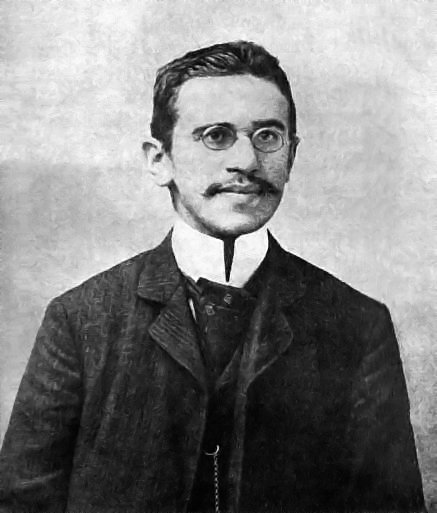
Review of Wittgenstein Reads Weininger – Stern, D., & Szabados, B. (2010) Cambridge, U.K. ; New York: Cambridge University Press by David Häuser
Videos of sessions from the 10TH ANNIVERSARY BWS ANNUAL CONFERENCE – WITTGENSTEIN IN THE 21ST CENTURY are now available on our conference video page.
Another volume is forthcoming (both volumes in Spanish)
|
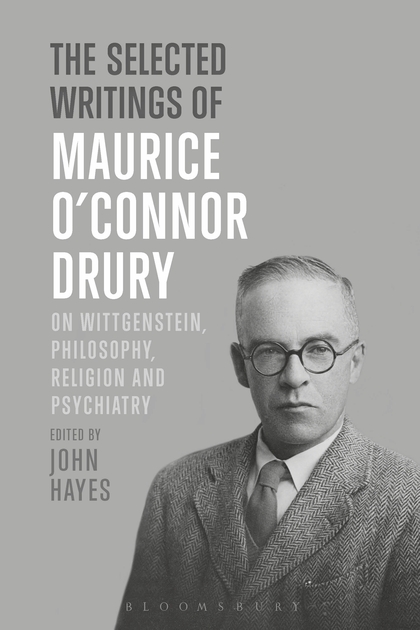
The Selected Writings of Maurice O’Connor Drury On Wittgenstein, Philosophy, Religion and Psychiatry Maurice O’Connor Drury Edited by John Hayes “As shown by the work of Störring, Ziehen, Jaspers, Janet, Mourgue, Morselli, Ey,Lanteri-Laura, Martin-Santos, Kimura, etc., the psychiatrist-philosopher remains acultural archetype. Con Drury’s work showed that such a figure was also present in Great Britain. |
|
Hardback | 472 pp | September 2017 | 9781474256360 | £130.00 £84.50 |
|
Maurice O’Connor Drury was among Wittgenstein’s first students after his return to Cambridge in 1929. The subsequent course of Drury’s life and thought was to be enormously influenced by his teacher, from his decision to become a doctor to his later work in psychiatry. The Selected Writings of Maurice O’Connor Drury brings together the best of his lectures, conversations, and letters on philosophy, religion and medicine. Central to the collection is the Danger of Words, the 1973 text described by Ray Monk as ‘the most truly Wittgensteinian book published by any of Wittgenstein’s students’. Through notes on conversations with Wittgenstein, letters to a student of philosophy and correspondence of almost 30 years with Rush Rhees, Drury gives shape to what he had learned from Wittgenstein. Whether discussing methods of philosophy, Simone Weil or the power of hypnosis, he makes fascinating excursions into the bearing of Wittgenstein’s thought on philosophy and the practice of medicine and psychiatry. With an introduction presenting a new biography of Drury, analysing the relationship between him and Wittgenstein, The Selected Writings of Maurice O’Connor Drury features previously unpublished archival sources. Beautifully written and carefully selected, each piece reveals the impact of Wittgenstein’s teachings, shedding light on the friendship and thinking of one of the most important philosophers of the 20th century. John Hayes is Professor of Philosophy and Dean of the Faculty of Arts at Mary Immaculate College, University of Limerick, Ireland. BWS Members can get a substantial discount. Please ask. |
If you have feedback on our website please contact
website@britishwittgensteinsociety.org