Category: Uncategorized (page 18 of 20)
WELSH PHILOSOPHICAL SOCIETY
Gregynog Hall, Friday 4th – Sunday 6th May 2018
54th Session: Programme
Friday, 4th May
4 p.m. Tea
4.30 pm Postgraduate paper: Rhianwen Daniel (Cardiff), ‘Appropriating Wittgenstein for Linguistic Nationalism’
7.00 p.m. Dinner
8.00 p.m. Hugh Knott (Anglesey) will introduce a discussion of Dick Beardsmore’s ‘Learning from a novel’
Saturday, 5th May
8 a.m. Breakfast
10 a.m. Hans Fink (Aarhus), ‘On Løgstrup on Trust’
11 a.m. Coffee, followed by discussion of paper
12.30 p.m. Short business meeting
1 p.m. Lunch
4 p.m. Tea
4.30 p.m. Toby Betenson (Bangor), ‘Sense and Sensitivity: Referents for the Moral Law’
7.00 p.m. Dinner
Sunday, 6th May
8 a.m. Breakfast
9.15 a.m. Annual Wittgenstein Lecture: Ian Ground (Hertfordshire and Newcastle), ‘Ensonification: Reflections’
10.15 a.m. Coffee & Discussion
11.45 a.m. Departure
The conference is sponsored by generous contributions from the British Wittgenstein Society and University of Wales Trinity St David.
If you would like to attend the meeting please complete and return the form below electronically, and send the requisite payment. The deadline for registration is Wednesday 31st January. While it may well be possible to register after this date, it cannot be guaranteed.
The registration fee covers full bed and board from afternoon tea on Friday to morning coffee on Sunday. If you do not fall clearly into any of the three categories listed below, if you will be coming for less than the full period, or if you are a postgraduate from outside Wales, please contact David Cockburn before making payment. It may be possible to make limited adjustments to rates to reflect individual circumstances. Please note that if you have to cancel, refund will be possible only if your place can be filled.
If you have any questions, about travel or anything else, please contact David Cockburn. If you are coming by train your station is Newtown (Powys). (David will try to coordinate transport from the station.)
David Cockburn, University of Wales Trinity St David
cockburn.david@gmail.com
Registration Form
Please complete and return a copy of this form electronically by Wednesday 31st January. At the same time, either put a cheque in the post or pay through internet banking: Welsh Philosophical Society, 40-27-01, 21296280. Give your surname as the reference. (Cheques, payable to ‘Welsh Philosophical Society’, should be sent to: David Cockburn, Department of Philosophy, University of Wales Trinity St David, Lampeter, Ceredigion SA48 7ED) All reservations must be accompanied by payment!
Name: …………………………………………………………
e-mail address: ………………………………………………
Postgraduate [Wales] (£ 80): ……. Staff: (£ 185): ….. Retired (£ 170): ………
Paid by (i) internet …. (ii) cheque …..
Dietary Requirements: Vegetarian…….Vegan …… Other …….
The philosophical estate of Ludwig Wittgenstein is now listed internationally as an important documentary heritage.
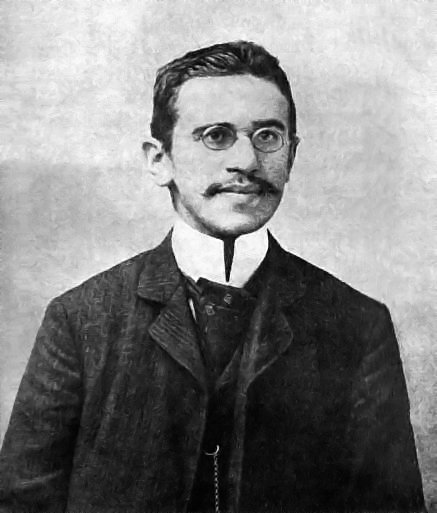
Review of Wittgenstein Reads Weininger – Stern, D., & Szabados, B. (2010) Cambridge, U.K. ; New York: Cambridge University Press by David Häuser
Videos of sessions from the 10TH ANNIVERSARY BWS ANNUAL CONFERENCE – WITTGENSTEIN IN THE 21ST CENTURY are now available on our conference video page.
Another volume is forthcoming (both volumes in Spanish)
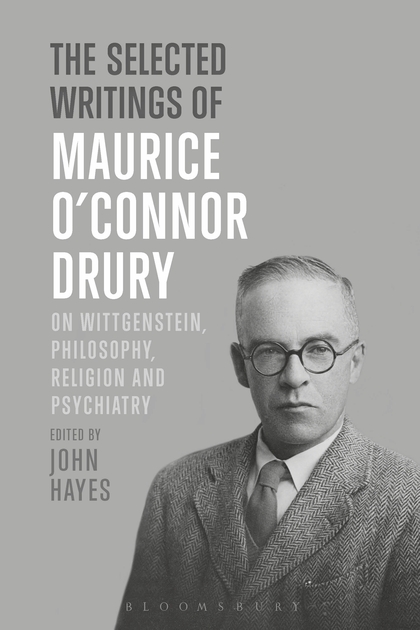
The Selected Writings of Maurice O’Connor Drury On Wittgenstein, Philosophy, Religion and Psychiatry
|
The Selected Writings of Maurice O’Connor Drury On Wittgenstein, Philosophy, Religion and Psychiatry Maurice O’Connor Drury Edited by John Hayes “As shown by the work of Störring, Ziehen, Jaspers, Janet, Mourgue, Morselli, Ey,Lanteri-Laura, Martin-Santos, Kimura, etc., the psychiatrist-philosopher remains acultural archetype. Con Drury’s work showed that such a figure was also present in Great Britain. |
|
Hardback | 472 pp | September 2017 | 9781474256360 | £130.00 £84.50 |
|
Maurice O’Connor Drury was among Wittgenstein’s first students after his return to Cambridge in 1929. The subsequent course of Drury’s life and thought was to be enormously influenced by his teacher, from his decision to become a doctor to his later work in psychiatry. The Selected Writings of Maurice O’Connor Drury brings together the best of his lectures, conversations, and letters on philosophy, religion and medicine. Central to the collection is the Danger of Words, the 1973 text described by Ray Monk as ‘the most truly Wittgensteinian book published by any of Wittgenstein’s students’. Through notes on conversations with Wittgenstein, letters to a student of philosophy and correspondence of almost 30 years with Rush Rhees, Drury gives shape to what he had learned from Wittgenstein. Whether discussing methods of philosophy, Simone Weil or the power of hypnosis, he makes fascinating excursions into the bearing of Wittgenstein’s thought on philosophy and the practice of medicine and psychiatry. With an introduction presenting a new biography of Drury, analysing the relationship between him and Wittgenstein, The Selected Writings of Maurice O’Connor Drury features previously unpublished archival sources. Beautifully written and carefully selected, each piece reveals the impact of Wittgenstein’s teachings, shedding light on the friendship and thinking of one of the most important philosophers of the 20th century. John Hayes is Professor of Philosophy and Dean of the Faculty of Arts at Mary Immaculate College, University of Limerick, Ireland. BWS Members can get a substantial discount. Please ask. |
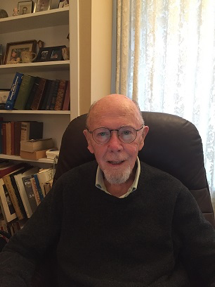
It is with profound sadness that I must inform you of the death of John V. Canfield, Professor Emeritus at the University of Toronto, on August 6. Professor Canfield was an eminent philosopher of language, philosopher of mind and Wittgenstein scholar. His penetrating intellect, his profound absorption of the key insights of Wittgenstein and of Buddhism; his plain-spoken correctives of such mentalistic conceptions of the human as Chomsky’s and Fodor’s, have made a unique contribution to philosophy and many other disciplines.
I knew and admired the work before knowing and admiring the man. His deep sensitivity and humanity, always present in his work, were also the first thing that struck you in the man. I first met Jack – as he liked to be called – at the 2003 Wittgenstein Symposium in Kirchberg. The modesty of his soft-spoken voice and his probing, yet unobtrusive eyes, contrasted with the red baseball cap that persisted throughout the week. We became inseparable that week, and close friends thereafter. My husband and I had the privilege of spending a few days in the Toronto home he shared with his wife, Sharon. We will never forget their unbounded hospitality. He had a range and depth in numbers, chess and meditation that I could not fathom.
Professor Canfield taught at the Universities of Colorado and Cornell, and at MIT before joining the University of Toronto in 1967 and retiring in 1995. Only a few weeks before his death, I sent him a paper I’d written for a conference. It relies heavily on his work, particularly on his last book: Becoming Human: The Development of Language, Self and Self-Consciousness (2007), and celebrates it as the most compelling account we have of the acquisition of language by the human species and the human individual. I am happy that he was able to see the paper, and be gratified by it. In fact, Canfield’s last book is a magnificent culmination of his thought. In it, he critiques, with the boldness and subtlety of a great thinker, the concept of self in our understanding of our humanity. Without losing sight of the mystico-religious, he exposes the ‘self’ as great mistake we have all somehow foisted upon ourselves; a superfluous appendage in the constitution of the human; and that with it gone, we are finally, authentically, left to ourselves. It is as a philosophical anthropologist that Canfield then retraces the main stages in our journey from hominid to human; and from ‘Eden’ – the wholly natural state of humanity before the development of a full-blown language. And it is as a philosopher of language and mind that he retraces the child’s journey – our individual journeys – into language. Canfield’s contribution – his filling in the blank spaces in our understanding of the steps we take towards becoming human; his compelling view of humans as animals among other animals, with no essential difference but only a uniqueness in richness and sophistication of language and culture – is unprecedented and invaluable.
John V. Canfield is the author of Wittgenstein: Language and World (1981); The Looking-glass Self: An Examination of Self-awareness (Praeger, 1990); Becoming Human: The Development of Language, Self and Self-Consciousness (Palgrave, 2007). He edited the magisterial 15-volume collection The Philosophy of Wittgenstein (Garland, 1986); Purpose in Nature (Prentice-Hall, 1966); and Philosophy of Meaning, Knowledge and Value in the Twentieth Century (Routledge, 2003). He is also co-editor, with Frank Donnell, of The Theory of Knowledge (1964); and, with Stuart Shanker, of Wittgenstein’s Intentions (Garland, 1993; Routledge Revival 2014). Some of the many excellent articles he wrote on the philosophy of mind and language, on Wittgenstein’s philosophy and on Buddhism include: ‘Anthropological Science Fiction and Logical Necessity’ (Canadian Journal of Philosophy, 1975); ‘Wittgenstein and Zen’ (Philosophy 1975); ‘Wittgenstein and Buddhism’ (with Chris Gudmunsen; Philosophical Review 1980); ‘The Community View (Philosophical Review, 1996); ‘The rudiments of language’ (Language & Communication, 1995); ‘The Passage into Language: Wittgenstein & Quine’ (in The Cambridge Companion to Wittgenstein, 1996), ‘Private Language: The Diary Case’ (Australasian Journal of Philosophy, 2001); ‘Pretence and the Inner’ (in The Third Wittgenstein, 2004); ‘Ned Block, Wittgenstein, and the Inverted Spectrum’ (Philosophia, 2009), ‘Back to the Rough Ground: Wittgenstein and ordinary language’ (in Wittgenstein and Analytic Philosophy: Essays for P. M. S. Hacker, 2009).
Our warmest thoughts are with his beloved wife, Sharon and their children, Zoe, Betsy, Sean, Edie, Patrick.