Category: Uncategorized (page 19 of 20)

New funding for Wittgenstein’s house in Skjolden

Press release:

New funding for Wittgenstein’s house in Skjolden

As one of the major sponsors, Luster Sparebank has given a grant of NOK 1 million to the project. This is in addition to NOK 1 million which has been funded by the county of Sogn og Fjordane, in which Wittgenstein’s house is located. There is still a long way for full funding, but with positive response from other key sponsors who will be contacted during the spring, the restoration of Wittgenstein’s house in its original surroundings can already commence within 2017.

The renowned Austrian philosopher and engineer Ludwig Wittgenstein (1889- 1951) is not very well known in Norway. However, every year people from around the world come to visit the site where he built the house in 1913, where he sought solitude to work without distractions. Here, Wittgenstein conducted works that delivered important contributions, not just to language and philosophy of mind, but also to mathematics and studies in aerodynamics.

Today, the house is located near the centre of Skjolden and is being used as a holiday house. The relocation and restoration of the house to its original architectural form, will create a historic and cultural heritage site in Sogn og Fjordane, and become an international tourist attraction.

Upon completion, the Foundation intends to inaugurate the house with its key stakeholders and friends representing Norwegian and international universities with a launch event in June 2019.

The project has received significant interest from across the world. A press delegation from Austria will visit the house in Skjolden in May 2017. Wittgenstein studied at the universities of Berlin, Manchester and Cambridge, which are all engaged in the project and agreed to collaborate to support the restoration of the house.

www.wittgenstein-foundation.com
The Wittgenstein Foundation in Skjolden, March 9th 2017


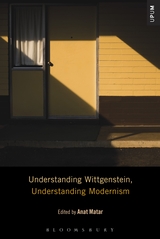
Understanding Wittgenstein, Understanding Modernism

Matar, Anat, ed. Understanding Wittgenstein, Understanding Modernism, 2017.

In the last half-century Ludwig Wittgenstein’s relevance beyond analytic philosophy, to continental philosophy, to cultural studies, and to the arts has been widely acknowledged.

Wittgenstein’s Tractatus Logico-Philosophicus was published in 1922 – the annus mirabilis of modernism – alongside Joyce’s Ulysses, Eliot’s The Waste Land, Mansfield’s The Garden Party and Woolf’s Jacob’s Room. Bertolt Brecht’s first play to be produced, Drums in the Night, was first staged in 1922, as was Jean Cocteau’s Antigone, with settings by Pablo Picasso and music by Arthur Honegger. In different ways, all these modernist landmarks dealt with the crisis of representation and the demise of eternal metaphysical and ethical truths. Wittgenstein’s Tractatus can be read as defining, expressing and reacting to this crisis. In his later philosophy, Wittgenstein adopted a novel philosophical attitude, sensitive to the ordinary uses of language as well as to the unnoticed dogmas they may betray. If the gist of modernism is self-reflection and attention to the way form expresses content, then Wittgenstein’s later ideas – in their fragmented form as well as their “ear-opening” contents – deliver it most precisely.

Understanding Wittgenstein, Understanding Modernism shows Wittgenstein’s work, both early and late, to be closely linked to the modernist Geist that prevailed during his lifetime. Yet it would be wrong to argue that Wittgenstein was a modernist tout court. For Wittgenstein, as well as for modernist art, understanding is not gained by such straightforward statements. It needs time, hesitation, a variety of articulations, the refusal of tempting solutions, and perhaps even a sense of defeat. It is such a vision of the linkage between Wittgenstein and modernism that guides the present volume.

Sixth Annual Conference of the Society for the Study of the History of Analytical Philosophy

The sixth annual conference of the Society for the Study of the History of Analytical Philosophy will be held at the University of Calgary, 8-10 May 2017.  It is locally organised by Richard Zach and sponsored by the Philosophy Department at the University of Calgary.

Plenary Speakers:

  • Juliet Floyd, Boston University
  • Robin Jeshion, University of Southern California
  • Bernie Linsky, University of Alberta

The Society for Study of the History of Analytical Philosophy is an international organization aimed at promoting discussion in all areas of scholarship concerning the development of philosophical logic, philosophy of language, the philosophy of mind, metaphysics, ethics and metaethics, the philosophy of science and epistemology. It welcomes scholars interested in the many ways in which the disciplines were influenced by thinkers such as Bolzano, Brentano and his school, Husserl, Frege, Russell, the Vienna Circle, Wittgenstein, Tarski, Quine and the Polish school, for instance, but also seeks to promote work engaging with lesser know figures and trends.

Previous conferences have been held at McMaster University, Indiana University, Université du Québec à Montréal, Trinity College Dublin and Metropolitan State University Denver.

CALL FOR PAPERS

SSHAP invites submissions for its 2017 annual conference. Paper submissions in all areas of the history of analytic philosophy are welcome.

In the past, some of the papers presented at the annual the conference were published in the Journal for the History of Analytical Philosophy. (www.jhaponline.org)

SUBMISSION DEADLINE: January 15, 2017.

Submission Instructions

Authors are requested to submit their long abstract electronically according to the following guidelines:

1) Long abstracts (500-1000 words) should be prepared for blind refereeing, 2) put into PDF file format, and 3) sent as an email attachment to the address given below. 4) The subject line of the submission email should include the key-phrase “SSHAP submission”, and 5) the body text of the email message should constitute a cover page for the submission by including i) return email address, ii) author’s name, iii) affiliation, iv) paper title, and v) short abstract (50-100 words) and vi) academic rank.

Time allowed for presentation is 60 minutes (including discussion).

Electronic submissions and queries should be sent to:

sshap@mcmaster.ca

For more information, please visit our website:

www.sshap.org

Sandra Lapointe

Associate Professor and Placement Director
Department of Philosophy

President, Canadian Philosophical Association/Présidente, Association Canadienne de Philosophie
(http://www.acpcpa.ca/)

Founding President, Society for the Study of the History of Analytical Philosophy
(http://www.sshap.org)

Vice-President, Society for Exact Philosophy
(http://www.phil.ufl.edu/sep/)

Secrétaire, Société de Philosophie Analytique
(https://sopha.univ-paris1.fr/)

Research Affiliate
Bertrand Russell Research Centre
(http://historyofanalyticalphilosophy.mcmaster.ca/)

Founding Associate Editor
Journal for the History of Analytical Philosophy
(http://jhaponline.org)

Contact:

Dr. Sandra Lapointe
Department of Philosophy
McMaster University
University Hall 310A
1280 Main Street West
Hamilton, Ontario, L8S 4K1
Tel: 905-525-9140, ext. 24312

CFP: Wittgenstein and Applied Epistemology

Wittgenstein and Applied Epistemology
6th Symposium of the International Ludwig Wittgenstein Society (ILWG)

Nova Institute of Philosophy (IFILNOVA)
Faculty of Social Sciences and Humanities, New University of Lisbon  (FCSH/NOVA)

Scientific Organization: Nuno Venturinha
6-7 June 2017

Invited speakers include:

Marco Brusotti (Technical University of Berlin / University of Salento)
Michel Le Du (University of Strasbourg)
Andrew Lugg (University of Ottawa)
Sofia Miguens (University of Porto)
Constantine Sandis (University of Hertfordshire)
Vicente Sanfélix (University of Valencia)
Genia Schönbaumsfeld (University of Southampton)

Call for Papers:

Abstracts, of no more than 500 words, are welcome for 30-minute
presentations in English addressing the intersections between
Wittgenstein’s thought and applied epistemology. They can be sent to
Prof. Dr. Nuno Venturinha at nventurinha.ifl@fcsh.unl.pt by 31 January
2017. Notifications will be sent by 15 March 2017. Subjects include, but
are not limited to, the following:

Aesthetic Epistemology
Formal Epistemology
Legal Epistemology
Moral Epistemology
Religious Epistemology
Scientific Epistemology
Social Epistemology

Attendance is free, but space is limited and pre-registration is
required. To pre-register, please send an email to the event organizer.
For more information, please visit www.ifilnova.pt and

www.ilwg.eu/?id=80#page.

Nuno Venturinha
Professor Auxiliar
Departamento de Filosofia / IFILNOVA
Faculdade de Ciências Sociais e Humanas – FCSH/NOVA
Av. de Berna, 26 C, 1069-061 Lisboa | Portugal
Tel: + 351 217908300 | Ext.: 1365
E-mail: nventurinha.ifl@fcsh.unl.pt
www.fcsh.unl.pt/faculdade-en/docentes/vncs_en?set_language=en

Book Reviews

We have some great books available for review at the moment. Make sure you have a look at our books section in the main menu
https://project1-nsylgljk0z.live-website.com/resources/book-reviews-requests#available

Dale Jacquette (1953-2016)

The BWS was deeply sorry to learn that Dale Jacquette has passed away. Dale was a superb individual, a passionate philosopher and an eminent Wittgensteinian. His love of philosophy and art was deep and infectious. He gave the Fourth BWS Biannual Lecture on ‘Wittgenstein’s Tractatus as Mystic Revelation’. Dale will be sorely missed, as a friend and philosopher. Our deepest condolences go to his beloved wife, Tina.
http://dailynous.com/2016/08/24/dale-jacquette-2016/

In Search of Ludwig Wittgenstein’s Secluded Hut in Norway: A Short Travel Film

By Kirsten Dirksen, the short film takes through the beautiful countryside of Norway, in search of the hut where Ludwig Wittgenstein exiled himself from society from time to time, first starting in 1913. Dirksen gives this preface to the film:

Over 100 years ago, philosopher Ludwig Wittgenstein went to the fjords of Norway to escape the scholarly world of Cambridge. His former teacher Bertrand Russell wrote, “I said it would be lonely, and he said he prostituted his mind talking to intelligent people.”

Not content with simply moving to the isolation of rural Norway- at the end of the Sognefjord (the deepest and second longest fjord)- Wittgenstein built his hut across the lake and halfway up a mountain from the nearest town (Skjolden). Measuring just 7 by 8 meters, the small cabin dubbed “Little Austria” (his native country) became his home on and off throughout his life (his longest stay here was 13 months).

Wittgenstein was fleeing the distractions and interruptions of a more social lifestyle and hoping to confront only his own thoughts. “Whoever is unwilling to descend into himself,” he wrote, “because it is too painful, will of course remain superficial in his writing.’” He wrote some of his most important work here (a precursor to his “Tractatus Logico-Philosophicus” and some of his “Philosophical Investigations”).

Today all that remains of his hut are its stone foundation and a very faint hikers trail up the mountain, though some Norwegians are trying to change this. Artists Marianne Bredesen, Sebastian Makonnen Kjølaas and Siri Hjorth (in collaborations with the Wittgenstein Society in Skjolden and funded by Public Art Norway) threw an all-expenses-paid vacation to bring fellow Oslo residents to the ruin. Inspired by Wittgenstein’s argument that “philosophical problems arise when language goes on holiday”, they are calling their art holiday “Wittgenstein on Vacation”. For part one, they entertained their guests with a weekend of lectures, meals and a Wittgenstein interpretation at the site of his cabin. We captured some of the show on our own journey to this disappearing piece of history.

http://www.openculture.com/2016/04/in-search-of-ludwig-wittgensteins-secluded-hut-in-norway-a-short-travel-film.html

Philosophical Investigations as Performance Philosophy

Wittgenstein’s Slapstick
Beth Savickey

Abstract

In “Performance Philosophy — Staging a New Field,” Laura Cull approaches performance as a source of philosophical insight and philosophy as a species of performance (Cull 2014, 15). This calls for a radical transformation of philosophy and its practices. What form might this take? Wittgenstein’s later philosophy provides one example. The language games presented in the opening remarks of the Philosophical Investigations (PI, [1953] 2001) are meant to be played out. They involve improvisation based on general scenes, stock characters, and linguistic play. When enacted, they are slapstick. As such, they offer a method of philosophical investigation in which clarity and insight are inherent in the performance itself. Wittgenstein’s language games were directly influenced by the subversive practices of Austrian commedia dell’arte and slapstick (through the works of Johann Nestroy and Karl Kraus). By their very nature, they challenge the pretensions of philosophical explanation and theory. Unlike attempts to compare Wittgenstein’s philosophy to theatre, enacting language games is a form of philosophical performance. Andrew Lugg notes that recent attempts to compare Wittgenstein’s philosophy to theatre problematize the opening remarks of the Investigations. However, enacting language games as a form of philosophical performance makes what is hidden, in all of its simplicity and familiarity, obvious, striking, and engaging.

://www.performancephilosophy.org/journal/article/view/34