Author: BWS Vice-President (page 22 of 24)

Wittgenstein’s Whewell’s Court Lectures

Press release from: Austrian Science Fund FWF

PR Agency: PR&D
In a project supported by the Austrian Science Fund FWF, the analysis of hitherto unpublished lecture notes from a student and friend of Wittgenstein’s has resulted in an important publication providing new insights into central issues of the philosophers’ work.

The pieces are slowly coming together to form a picture. – Decades after the death of one of the 20th century’s most influential philosophers, scientists are still discovering hitherto unpublished manuscripts from Ludwig Wittgenstein’s milieu. During his life, the philosopher who was born in Vienna (1889) published a single work that made him famous: the “Tractatus logico-philosophicus”. Many of his other texts existed only as manuscripts and were published only after his death in 1951. The Wittgenstein Archives in Bergen (Norway) is currently working on an open-access edition of his philosophical manuscripts, known as “Wittgenstein’s Nachlass”: www.wittgensteinsource.org

Hitherto unpublished lecture notes

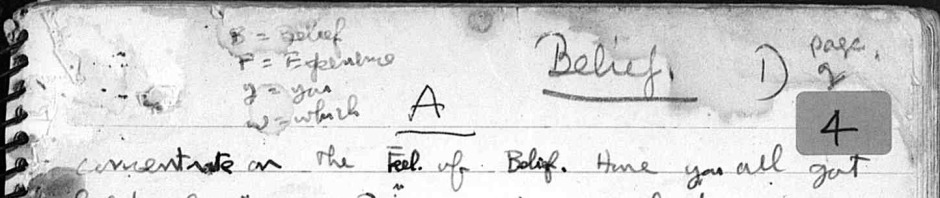
Volker Munz from the Department of Philosophy at the University of Klagenfurt (Carinthia) has taken a new approach to the work of the thinker who spent most of his life in Cambridge. Thanks to contacts Munz established to the administrators of Wittgenstein’s estate during his study years in Wales in the late 1980s, more than 2,000 manuscript and typescript pages from a student and close friend of Wittgenstein’s came into his possession. The notes were taken by Yorick Smythies during lectures given by Wittgenstein in Cambridge between 1938 and 1941. With support from the Austrian Science Fund FWF, Volker Munz and his assistant Bernhard Ritter have been carefully editing these notes of varying format and quality over the last ten years. They added introductions and references to Wittgenstein’s published writings and put dates against the notes. “Dating was one of the greatest challenges, since most of the material lacked any direct indication as to time”, explains Munz, who nevertheless succeeded in ascertaining with a high degree of probability the year and even the term in which each set of notes was taken.

Volker said “I first met Rush Rhees when I came to Swansea as an exchange student in the late eighties. He allowed me join his PhD seminar, and from then on we saw each other regularly. Thereby I also got to know Peg Smythies Rhees and kept in close contact with her until she died in 2014. Sometime in the mid-nineties, Peg provided me with around 30 typescripts, all in all about 700 pages, and 23 tapes with recordings of the material dictated by Smythies. These tapes were based on the original notes Smythies took during the lectures. Together with the handwritten notes, the whole corpus covers about 2000 pages. In 2005, I applied for a research project to edit the material. Five years later Bernhard Ritter joined me, and we are now nearing the completion of the edition”

munz_volker

Volker Munz

Bernhard Ritter

Bernhard Ritter

New insights in central issues

“What is special about this project is the fact that no other student notes are extant from that period, except the lectures on aesthetics and on the foundations of mathematics. Hence they open additional insight into what Wittgenstein was working on during those years”, emphasises Munz. Unlike Wittgenstein, Smythies gave titles to all lectures. They concern central issues such as knowledge, belief, similarity or freedom of the will. The notes also mention discussions of authors, a rare occurrence in Wittgenstein’s work otherwise. Apart from Bertrand Russell, George E. Moore and William James, the philosopher discusses the theorems of Kurt Gödel, W. E. Johnson and the question whether there is “an infinite number of shades of colour”, as well as David Hume’s notion of ‘belief’. The lectures also highlight the important role pictures and metaphors played in Wittgenstein’s thinking. Moreover the notes contain new instances of the famous metaphor of the fly and the fly bottle and about 70 drawings by Wittgenstein which Smythies copied from the blackboard. “Many examples and issues touched upon in these notes were discussed only in a much more cryptic way in Wittgenstein’s published works. This material now opens up new connections, and some trains of thought appear more stringent”, project director Munz underlines the significance of the lecture notes.

International Wittgenstein research

Ludwig Wittgenstein’s lectures and students’ notes are of growing importance for research, as is a scholarly investigation of the generation that came after Wittgenstein. According to Munz, the international scientific community engages in frequent exchanges in this respect. Documents and works by and about Wittgenstein are preserved in different international archives – mostly places where the philosopher spent some of his time. In addition to the library of Trinity College in Cambridge, well known archival sources are the Brenner-Archiv in Innsbruck, which has recently been able to acquire the originals of several letters from Moritz Schlick to Wittgenstein, as well as the Wittgenstein Archives at the University of Bergen in Norway. Some documents can also be found in Kirchberg am Wechsel (Lower Austria).

A research focus in Austria

“Until the 1970s, Wittgenstein was of little significance in Austria”, Munz notes. It was only thanks to the philosopher Rudolf Haller that Wittgenstein became a figure of renown there. Haller was a co-founder of the Austrian Ludwig Wittgenstein Society in 1976, the year that also saw the first of what was to become an annual Wittgenstein Symposium in Kirchberg. Still today, this event is a fixture for Wittgenstein scholars, attracting several hundred participants from all over the world. 2009 marked the beginning of a Wittgenstein Summer School in Kirchberg under the scientific direction of Volker Munz, which has aroused strong interest.

Publication and further projects

The publication of Yorick Smythies’ lecture notes is going to be an important contribution to the appreciation of Wittgenstein in general and will spark further exploration of the seminal body of work by this philosopher. The volume on the FWF research project will be published this year by Wiley-Blackwell under the title “The Whewell’s Court Lectures, Cambridge 1938 – 1941”. For Munz, this does not mean he considers his investigations of the topic as being finished. In talking about further projects, the researcher from the University of Klagenfurt relates that Smythies himself propounded a philosophy of his own which is still completely unknown and untypical of the Wittgenstein tradition. In addition, there are volumes of poems and a great number of notebooks by the Wittgenstein student which still await the researcher’s attention.

FWF Austrian Science Fund

The Austrian Science Fund (FWF) is Austria’s central funding organization for basic research.

The purpose of the FWF is to support the ongoing development of Austrian science and basic research at a high international level. In this way, the FWF makes a significant contribution to cultural development, to the advancement of our knowledge-based society, and thus to the creation of value and wealth in Austria.

Scientific Contact:
Ass. Prof. Dr. Volker A. Munz
Alpen-Adria-University
Universitaetsstrasse 65–67
A-9020 Klagenfurt am Woerthersee, Austria
Tel.: +43 / 463 2700 – 2117
E volker.munz@aau.ac.at
W www.uni-klu.ac.at/english

Austrian Science Fund FWF:
Marc Seumenicht
Haus der Forschung
Sensengasse 1
1090 Vienna, Austria
T +43 / 1 / 505 67 40 – 8111
E marc.seumenicht@fwf.ac.at
W fwf.ac.at/en

Distribution:
PR&D – Public Relations for Research & Education
Mariannengasse 8
1090 Vienna, Austria
T +43 / 1 / 505 70 44
E contact@prd.at
W prd.at/en

This release was published on openPR.
CFP: VON WRIGHT AND WITTGENSTEIN IN CAMBRIDGE

SYMPOSIUM ANNOUNCEMENT AND CALL FOR PAPERS:
VON WRIGHT CENTENARY SYMPOSIUM
CAMBRIDGE, SEPTEMBER 2016

Symposium Website

Georg Henrik von Wright (1916-2003) is known for his contributions to many key fields in analytic philosophy, as a builder of bridges between the analytic and the continental traditions in contemporary philosophy and as one of the main editors of the work of Ludwig Wittgenstein.

In 1948 von Wright succeeded Wittgenstein as professor of philosophy at Cambridge’s Trinity College. He returned from Cambridge to Finland after Wittgenstein’s death in 1951.

In this centenary year of Von Wright’s birth, the symposium “Von Wright and Wittgenstein in Cambridge” will focus on the philosophical dynamics and consequences of the relation between von Wright and Wittgenstein with a special emphasis on von Wright as an interpreter and editor of Wittgenstein.

Date

September 20-23, 2016

Venue

Strathaird, Cambridge, UK

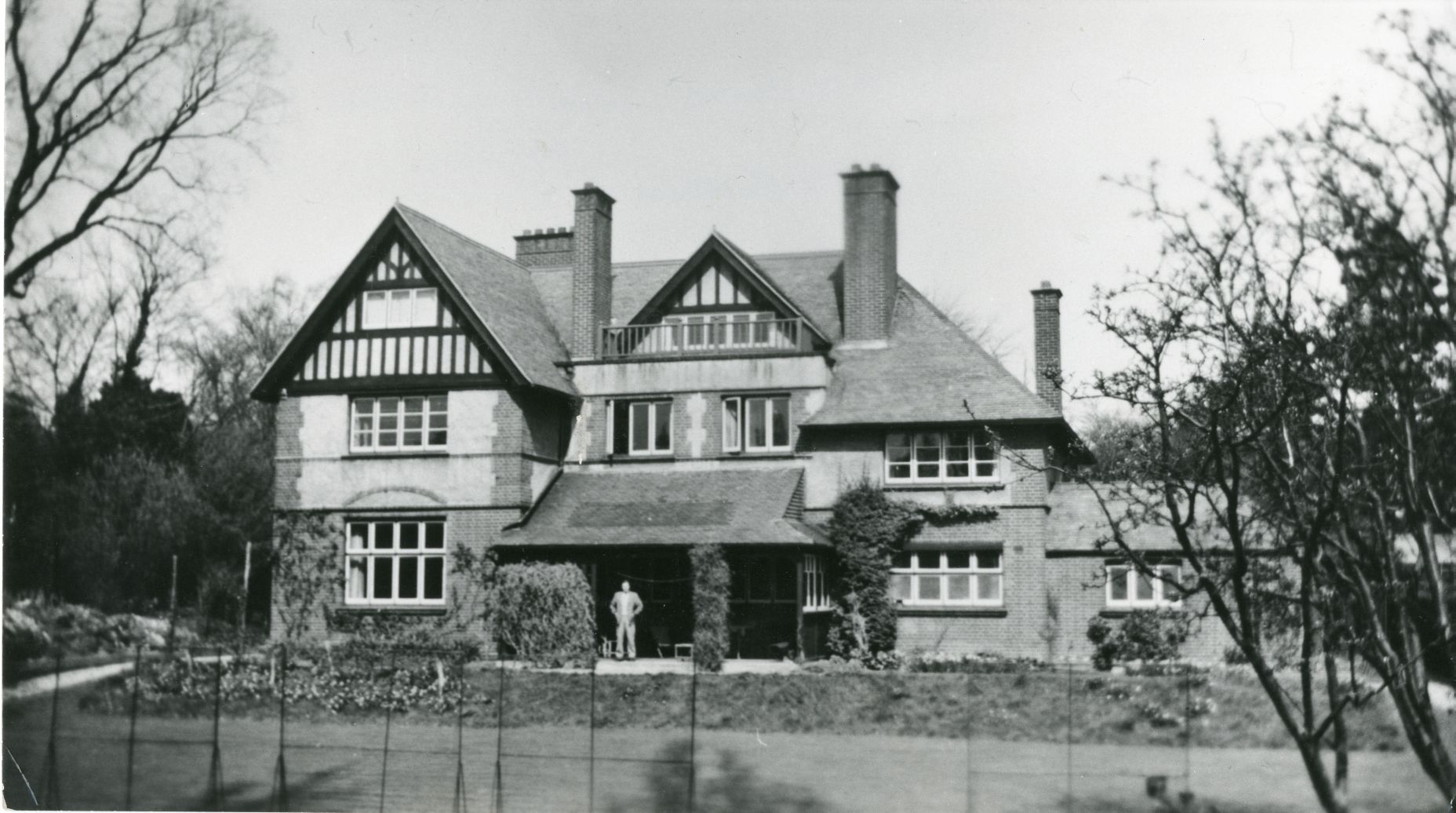
Strathaird is the house in which the von Wright family lived in Cambridge in 1949-1950. On several different occasions, Ludwig Wittgenstein also stayed at Strathaird as guest of the von Wright family. The house is now owned by Lucy Cavendish College.

Confirmed Speakers:

  • Marco Brusotti (Lecce / Berlin)
  • Alberto Emiliani (Helsinki)
  • Christian Erbacher (Bergen)
  • Lars Hertzberg (Abo)
  • James Klagge (Virginia Tech)
  • Andre Maury (Helsinki)
  • Volker Munz (Klagenfurt)
  • Alois Pichler (Bergen)
  • Josef Rothhaupt, (Munchen)
  • Joachim Schulte (Zurich)
  • Jonathan Smith (Trinity)
  • Use Somavilla (Innsbruck)
  • Anne-Marie S0ndergaard-Christensen (Odense)
  • Friedrich Stadler (Wien)

There will be a workshop on ‘A Collection of Remarks by Ludwig Wittgenstein – Selected by Georg Henrik von Wright (1965-1966)’ organised by Volker Munz and Josef Rotthaupt in cooperation with the Von Wright and Wittgenstein Archives of the University of Helsinki.

Open call for papers:

In addition to the invited speakers we invite speakers selected through an open call for papers.

We welcome contributions, also from scholars in fields other than philosophy, on:

  • the philosophical dynamics and consequences of the relation between von Wright and Wittgenstein with a special emphasis on von Wright as interpreter and editor of Wittgenstein
  • the intellectual and cultural context of the relation between von Wright and Wittgenstein.

Abstracts should:

  • be submitted no later than April 15, 2016
  • have a maximum length of 500 words
  • be sent to hy-wwa(5)helsinki.fi Notifications will be sent out by the end of April 2016.

The maximum number of participants is 70. Early application is encouraged. Applications submitted by April 15 will be given priority.

The Symposium fee is 100 euros. Lunch and coffees served on location and a conference dinner is covered by the Symposium fee. Accommodation on location at Strathaird can be offered on request for a limited number of participants. The additional fee for participants staying at Strathaird is 100 euros.

The Symposium is organized by the von Wright and Wittgenstein Archives at the University of Helsinki (wwa.helsinki.fi) in cooperation with:

  • The Austrian Ludwig Wittgenstein Society
  • The British Wittgenstein Society
  • The International Ludwig Wittgenstein Institute (ILWI)
  • The International Ludwig Wittgenstein Society
  • The Nordic Wittgenstein Society
  • The Wittgenstein Archives at the University of Bergen

The Symposium is supported by the Jenny and Antti Wihuri Foundation, the Oskar Oflund foundation and the International Ludwig Wittgenstein Society.

Organizing Committee

  • Risto Vilkko, member of the steering committee of the von Wright and Wittgenstein Archives at the University of Helsinki
  • Thomas Wallgren, director, the von Wright and Wittgenstein Archives at the University of Helsinki
  • Bernt Österman, curator, the von Wright and Wittgenstein Archives at the University of Helsinki Contact point: hy-wwaPhelsinki.fi PhD Bernt Osterman

The von Wright and Wittgenstein Archives PO Box 24

FI-00014 University of Helsinki Finland

Wittgenstein Source Additions

More Wittgenstein manuscripts and typescripts have been added to Wittgenstein Source, the Bergen run website that offers free access to facsimiles and editions of Wittgenstein primary sources. The site now also houses “Tractatus Publication Materials (LPA)”, edited by Alfred Schmidt from the Austrian National Library. This edition gives access to facsimiles of the original print of “Logisch-philosophische Abhandlung”, the typescript of Ramsey’s English translation of the “Abhandlung”, the questionnaire sent by Ogden to Wittgenstein regarding the English translation, as well as the proofs of the English “Tractatus Logico-Philosophicus”, all four also containing annotations and corrections in Wittgenstein’s hand. Visit the edition on http://wittgensteinsource.org/ where also more detailed descriptions of the four items are available.

The Freud Museum presents Wittgenstein’s Dream

The Freud Museum  presents Wittgenstein’s Dream, an exhibition of work by Gavin Turk and the latest in a critically acclaimed series curated by James Putnam. Turk’s installation and intervention in Freud’s former residence investigates the intriguing conceptual dialogue between two enlightened Viennese thinkers of the 20th century, Sigmund Freud (1856-1939) and Ludwig Wittgenstein (1889-1951).

https://freud.org.uk/exhibitions/76225/wittgensteins-dream/

8th British Wittgenstein Society Annual Conference: registration now open

Booking for the Eighth British Wittgenstein Society Annual Conference booking is now open.
Eighth British Wittgenstein Society Annual Conference on the theme of Wittgenstein, Ethics and Religion

The Conference will take place at Hinsley Hall, 62 Headingley Lane, Leeds, LS6 2BX, beginning at 09:30 on Tuesday 6th September and finish at 18:00 on Wednesday 7th September 2016.

Last Booking Date for this Event
23rd August 2016

List of speakers:

Sophie-Grace Chappell (Open University)
Gabriel Citron (Toronto)
John Haldane (St Andrews)
Stephen Mulhall (Oxford)
Wayne Proudfoot (Columbia)
Duncan Richter (Virginia M.I.)
Genia Schönbaumsfeld (Southampton)
Michael Scott (Manchester)
Chon Tejedor (Hertfordshire)
Rowan Williams (Cambridge)


“Portraits of Wittgenstein” published by Bloomsbury

The BWS is delighted to announce that the new second edition of Portraits of Wittgenstein published by Bloomsbury this month in hardback and e-version.

With portraits from more than seventy-five figures, Portraits of Wittgenstein brings together the personal recollections of philosophers, students, friends and acquaintances, including Bertrand Russell, G. E. Moore, F. R. Leavis, A. J. Ayer, Karl Popper, Friedrich von Hayek, G. H. von Wright, Rush Rhees, Freeman Dyson, G. E. M. Anscombe, Iris Murdoch, Mary Midgley, Mary Warnock and many more.

Now revised and updated, Portraits of Wittgenstein includes new selections, revised contributions, photographs and maps that provide historical context to Wittgenstein’s relationships with his intellectual and social circle. This collection of valuable and hard-to-find material is an indispensable resource for scholars and students of the life and work of Ludwig Wittgenstein.

With 1138 pages, in two volumes, and a hugely complex permissions history, the new edition is inevitably expensive but Bloomsbury are offering a 50 % discount exclusively to BWS members. Details are available  to registered members here.  The BWS encourages its members to ask their institutional libraries to buy a copy.

Co-editor and BWS Secretary, Ian Ground commented: “It has been hard work but still a pleasure and a privilege for Berry Flowers and I to bring this new edition to press. We hope that the volumes will find their place as a standard point of reference for Wittgenstein studies. We owe immense thanks to the Bloomsbury Academic Press who have done a fantastic job in supporting us in our editorial work and in bringing such high production values to the volumes themselves. ”

BWS President Daniele Moyal-Sharrock added: “As Wittgenstein was fond of pointing out, context is indispensable to meaning. This extraordinary collection adds living context to Wittgenstein’s thought, thereby facilitating and enhancing its grasp. It is a biographical as well as a philosophical gem.”

Advance praise for the new edition

“I have made constant use of this multi-volume collection of reminiscences about Wittgenstein since its original publication in 1999. This new and expanded edition adds several insightful pieces, including a detailed report on Wittgenstein’s visit to Cornell in 1949. Endlessly fascinating!” –  James C. Klagge, Professor of Philosophy, Virginia Tech, USA and Author of ‘Wittgenstein in Exile.’


“Portraits of Wittgenstein is a comprehensive collection of recollections and memoirs of the greatest philosopher of the twentieth century. It is a mesmerising array of snapshots of a fascinating and charismatic thinker, which will give delight to many readers, and provides indispensable raw materials for reflections on Wittgenstein and his role in his troubled times and the relevance of his thought to ours.” –  Peter Hacker, Professor of Philosophy, University of Kent at Canterbury, UK.


“In bringing together such a large collection of memoirs of Wittgenstein – many hard to find in their original publications – the editors of this two-volume set perform an inestimable service to scholars of the philosopher, whether their interest is simply in biographical details or if they wish to contextualise his philosophy. The original of this publication has been of great service to me over the years in understanding the life and work of Wittgenstein, and I fully expect this expanded edition to fill a similar role.” –  Jonathan Smith, Archivist, Trinity College Library Cambridge, University of Cambridge, UK.


“Portraits of Wittgenstein is an invaluable cornucopia of biographical materials – from chronologies to records of teaching, from diary extracts to reminiscences. These newly updated volumes richly frame the extraordinary life of one of the twentieth-century’s greatest philosophers as well as the receding horizon of his own time.” –  David Stern, Professor of Philosophy, Univerity of Iowa, USA.

See more at: http://www.bloomsbury.com/uk/portraits-of-wittgenstein-9781474260190/#sthash.qcp5QQ6L.dpuf