Author: BWS Vice-President (page 23 of 24)

The restoration of Wittgenstein’s ledger stone


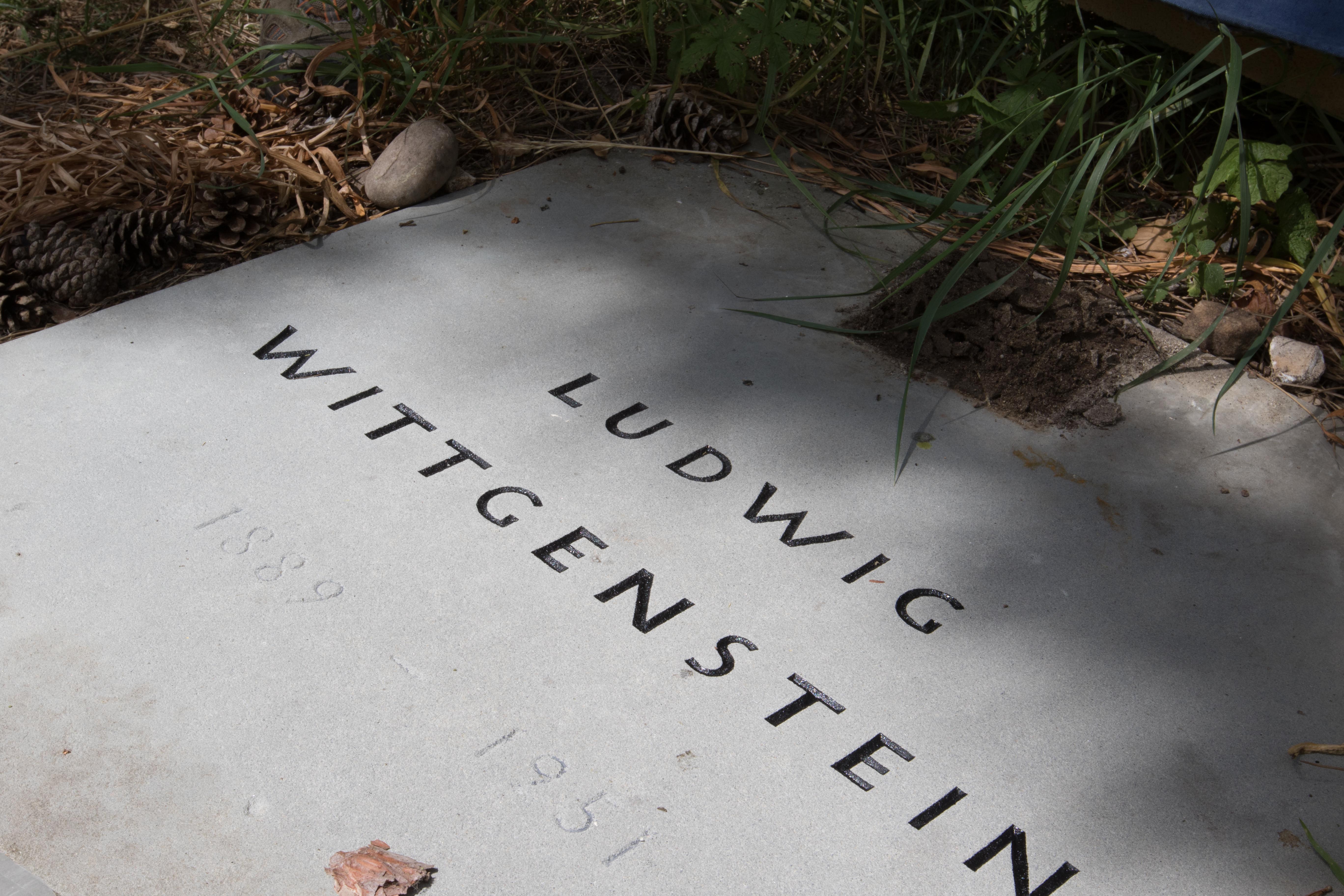
As BWS members will know, Wittgenstein’s grave, in Ascension Parish Burial Ground in Cambridge, is marked by a plain and simple ledger stone with only his name and dates. It is a beautiful tranquil spot though not too easy to find. A video showing the way to the location is available here.

THE ENTRANCE SIGN TO THE BURIAL GROUND

THE ENTRANCE SIGN TO THE BURIAL GROUND

THE LANE TO THE BURIAL GROUND

THE LANE TO THE BURIAL GROUND

Even so, according to the parish, the grave receives more than hundred visitors a year. The burial ground contains the graves of many other famous figures from Cambridge (see the listing) some of whom have connections of various kinds with Wittgenstein including, Sir James Frazer, G.E.Moore, John Wisdom and of course Elisabeth Anscombe. Wittgenstein’s grave remains the most frequently asked for and visited site.

The Society was aware that the ledger stone was beginning to look stained, the stone tarnished and the lettering beginning to wear with a danger of becoming illegible. Several reports from BWS members in the summer of 2014 confirmed our determination to take action.

LW Grave Pre-Restoration

WITTGENSTEIN’S LEDGER STONE SHOWING DETERIORATION (CREDIT: ERIC MARLAND)

BWS secretary, Dr. Ian Ground, was asked to investigate and identity options for conservation. After initial inquiries with the Parish an initial report was commissioned from the Parish Stonemason.

The stonemason at the burial ground – Mr Eric Marland studied art restoration at the City and Guilds of London Art School before training with David Kindersley, who was a pupil of Eric Gill. Over the years he has guided many hundreds of visitors to Wittgenstein’s ledgerstone and has assiduously collected and stored the varied tokens often left there by visitors. One visitor from Vienna left him a rather special gift – a floor tile from the Wittgenstein Family house on Vienna’s Alleegasse rescued as the building was demolished.

Floor tile from the Wittgenstein Family house on Vienna's Alleegasse

Floor tile from the Wittgenstein Family house on Vienna’s Alleegasse

After close examination, Mr Marland concluded that the ledger stone, being made of sandstone, rather than limestone, is relatively impervious to erosion by acidic rain. However the shaded location of the grave means that is it vulnerable to staining by berry-eating birds and lichen too tends to get a hold which can endanger the lettering. It was recommended that specialist cleaning of the ledger stone be carried out to remove the bird and lichen stains and to return the appearance of the sandstone.

Cleaning the Ledger stone

The Society then contacted Wittgenstein’s next of kin, the Stonborough family to advise them of the options and to seek their views on the way forward. Mr William Stonborough was the point of contact for the family and was kept fully informed of all developments by Dr. Ground.

A first and sensitively conducted professional cleaning took place and the result was much closer to the stone as it was originally intended.

Untitled6

THE CLEANED LEDGER STONE WITH THE ANSCOMBE/GEACH STONE AT THE UPPER LEFT.

The initial cleaning  revealed traces showing that the lettering on the ledger stone was originally picked out in black.

THE LETTERING AFTER CLEANING OF THE SANDSTONE REVEALING TRACES OF THE ORIGINAL BLACK PAINT

THE LETTERING AFTER CLEANING OF THE SANDSTONE REVEALING TRACES OF THE ORIGINAL BLACK PAINT


A CLOSER VIEW OF THE LETTERING AFTER CLEANING OF THE SANDSTONE WITH TRACES OF THE ORIGINAL BLACK PAINT CLEARLY VISIBLE.

A CLOSER VIEW OF THE LETTERING AFTER CLEANING OF THE SANDSTONE WITH TRACES OF THE ORIGINAL BLACK PAINT CLEARLY VISIBLE.

The nearby and recently restored lettering on the stone to Elizabeth Anscombe, to which has been added the name of her husband Peter Geach  gives a good impression of how Wittgenstein’s ledger stone would originally have appeared.

Untitled7

THE RECENTLY RESTORED AND REPAINTED ANSCOMBE AND GEACH LEDGER STONE


Repainting the Lettering

The next step was to determine whether, in order to preserve the lettering and to return to the ledge stone to its intended appearance, it was necessary to repaint the letters in the original black. The stonemason’s report concluded that the work was necessary and the family gave their permission and support for the work to be carried out.

The repainting in a matt enamel black was carried out on 17th and 18th June, 2015. The process took nearly 8 hours in total.

CAREFUL AND PAINSTAKING REPAINTING

CAREFUL AND PAINSTAKING REPAINTING

Repainting LW dates

REPAINTING LW DATES

One thing that became more evident in the repainting was the imprecision of some of the original lettering by Barry Pink (Oxford art student, lodger with Anscombe and a friend of Wittgenstein’s  – see Monk, R., 1991. Ludwig Wittgenstein: The Duty of Genius, pp. 567-8)

Though the repainting might have been used to ameliorate some of the imprecision, it was decided that such a course would not be consistent with the requirements of conservation.


THE REPAINTING HALFWAY THROUGH THE PROCESS CLEARLY SHOWING THE MARKED IMPROVEMENT IN LEGIBILITY

THE REPAINTING HALFWAY THROUGH THE PROCESS CLEARLY SHOWING THE MARKED IMPROVEMENT IN LEGIBILITY

LW Grave Pre-Restoration

LW Grave Pre-Restoration

LW LEDGERSTONE BEFORE CLEANING AND REPAINTING OF THE LETTERING

LW LEDGERSTONE AFTER CLEANING AND REPAINTING OF THE LETTERING


LW Ledger Stone

The ledger stone restored. The iron urn is not thought original but is used by visitors to leave flowers and tokens. It has now been moved off the stone itself and the area of the stone underneath the urn cleaned.

Recording and Interpreting the event

As well as BWS Secretary, Dr. Ground is currently Teaching Fellow at the Fine Art Department Newcastle University. His view was that “Given his central philosophical concerns, the repainting of the letters in Wittgenstein name seem an appropriate occasion for both historical recording and creative interpretation”

MR ERIC MARLAND WITH ARTIST TOM HUME AND THE ANIMA COLLECTIVE (DITTE GOARD, CHARLOTE CHARLOTTE VALETTA, JAYNE DENT, SARAH GRUNDY)

MR ERIC MARLAND WITH ARTIST TOM HUME AND THE ANIMA COLLECTIVE (DITTE GOARD, CHARLOTE CHARLOTTE VALETTA, JAYNE DENT, SARAH GRUNDY)

With the aid of a generous grant from the Newcastle Institute for Creative Arts Practice, Dr. Ground took 5 artists from Newcastle University’s Fine Art Department to Cambridge for the restoration. One student, Tom Hume, whose creative work has drawn on Wittgensteins texts, created a digital film record of Mr Marland’s painstaking work.

RECORDING THE REPAINTING FOR DOCUMENTARY RECORD AND CREATIVE INTERPRETATION

RECORDING THE REPAINTING FOR DOCUMENTARY RECORD AND CREATIVE INTERPRETATION

At the commencement of the work, the four piece Anima Collective (Ditte Goard, Charlote Charlotte Valetta, Jayne Dent, Sarah Grundy) performed a vocal piece based on Wittgensteinian themes of speech and silence. The resultant videos and images will be made available via the BWS website. While Tom Hume will be basing a new artwork on the digital video record, Dr. Ground’s intention is to make the raw footage available for creative interpretation by other artists. Expect more news on this soon.


On behalf of Wittgenstein’s family, William Stonborough told  the Society:

“I would like to extend my thanks and those of my family to Dr. Ground, the BWS and their members for their initiative and generosity in making the restoration and continuing upkeep of the grave possible. The images show a great improvement to when I last visited Ascension Parish prior to the restoration, and I look forward to visiting again when I return to the UK to see the result myself”

The Future

We are delighted to report that, with the full support and thanks of the family and the generous support of some BWS donors, a fund is now in place to carry out maintenance and careful cleaning of the ledger stone on an annual basis for the foreseeable future. This will maintain the stone in better condition and forestall any further deterioration. In addition, simple signs indicating the way to Wittgenstein ledgerstone have been commissioned.

Restoring the appearance of any grave stone is a sensitive matter – that of a figure such as Ludwig Wittgenstein especially so – but we hope that BWS members will be pleased that with the full support of the family, informed by professional advice, the surface of Wittgenstein’s ledger stone has been saved from further deterioration, the lettering made legible, and its maintenance placed on a sustainable basis.

The Society believes that this work will mean that in this quiet corner of Cambridge, Wittgenstein’s grave will continue to provide a place of reflection for very many students, scholars and visitors in future.

The Society would like to extend its thanks to everyone who assisted with this project to restore the ledger stone: Dr. Ground, the Rev Dr Janet Bunker, Eric Marland, William Stonborough, Ray Monk and BWS donors, Peter Hacker and Dennis Patterson.

BWS SECRETARY DR IAN GROUND & STONEMASON MR. ERIC MARLAND

BWS SECRETARY DR IAN GROUND & STONEMASON MR. ERIC MARLAND

There is No Theory of Everything

The New York Times has a section called the Stone which features the writing of contemporary philosophers and other thinkers on issues both timely and timeless. The series moderator is Simon Critchley who teaches philosophy at The New School for Social Research in New York. September’s blog carried an item on Frank Cioffi and Wittgenstein.

British Wittgenstein Lecture

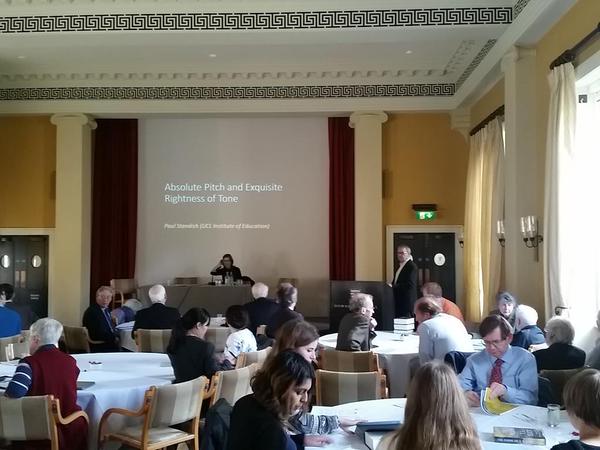
Professor Paul Standish (Philosophy of Education, UCL) preparing to give the British Wittgenstein Lecture at the Leavis Society Conference in Downing College Cambridge, on 24 September. The title of the lecture, in which Professor Standish drew attention to the many commonalities between Wittgenstein and Leavis, was: ‘Absolute pitch and exquisite rightness of tone’.

Online resources

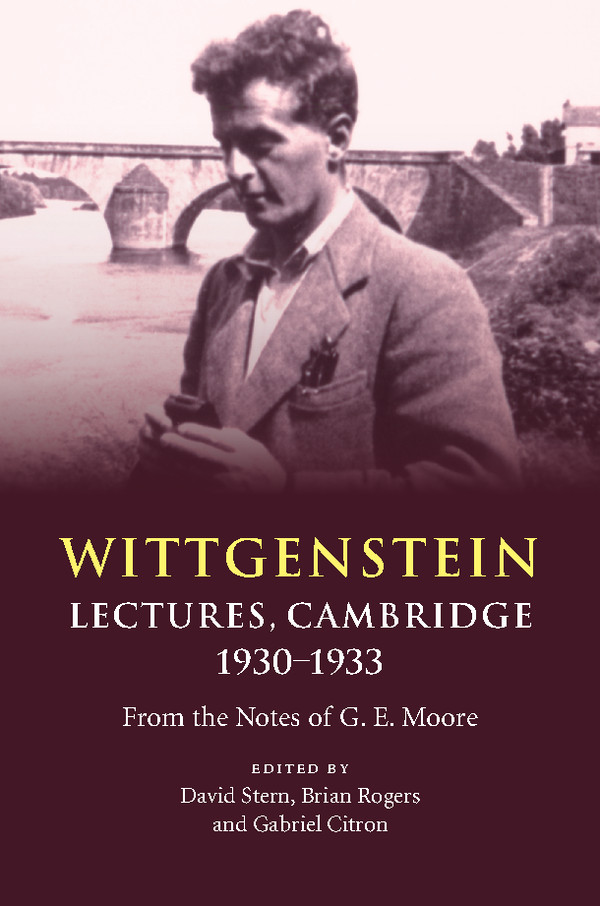
By the end of 2015, new facsimiles of most of the Nachlass from the Wren Library at Trinity College will be online at the Wittgenstein Archives at the University of Bergen, including: Wittgenstein: Lectures, Cambridge 1930-1933, From the Notes of G. E Moore Cambridge: Cambridge University Press (2016).

“We are happy to announce that a significant part of the new high quality Wittgenstein Nachlass facsimile edition is already online. This includes such prominent items as the Big Typescript, the Brown Book and the Lecture on Ethics. The Wittgenstein Archives at the University of Bergen (WAB), in co-operation with Trinity College Cambridge and the Stanhill Foundation, is producing a new Nachlass facsimile of Wittgenstein originals, which are freely available online on WAB’s Wittgenstein Source site.  By the end of 2015, new facsimiles of most of the Nachlass from the Wren Library at Trinity College will be on the site, as well as facsimiles of the Nachlass from the Austrian National Library in Vienna. Plans for future additions include Nachlass facsimiles from the Bodleian Library in Oxford as well  as the Russell Archives in Ontario. In addition to the facsimile edition, Wittgenstein Source will also host updated text editions and archival and text-genetic descriptions of the single Nachlass items.

Wittgenstein Source also hosts its first Wittgenstein primary source that is not part of the Wittgenstein Nachlass in the strict sense of the term: facsimiles of six of G.E. Moore’s notebooks, containing his almost verbatim record of Wittgenstein’s classes, Cambridge, 1930-1933. Also included are facsimiles of Moore’s later summaries of his lecture notes, and a 1932 essay by Moore critiquing Wittgenstein’s conception of grammar. This edition is provided by David G. Stern, Brian Rogers, and Gabriel Citron. The facsimiles are reproduced by kind permission of the Syndics of Cambridge University Library, Perry Moore, and Thomas Baldwin. They were purchased thanks to a Franklin Research Grant from the American Philosophical Society and a grant from the University of Iowa Arts & Humanities Initiative. The three editors have also produced a book edition of these materials: Wittgenstein: Lectures, Cambridge 1930-1933, From the Notes of G. E Moore Cambridge: Cambridge University Press (2016).”

Wittgenstein’s music

Ray Monk has set up a Spotify playlist of Wittgenstein’s favourite music. It comprises some 220 tracks of mostly German music: Brahms, Schubert, Beethoven, Mendelssohn, Wagner with a little Yvette Guilbert thrown in. A listening time of 21 hours. What does the music tell us about the man?

Wittgenstein’s Jet

Did the future philosopher, Ludwig Wittgenstein, design and build an early jet powered aero-engine, in Manchester, in 1908? This programme tells the story of Wittgenstein’s earliest project, and rebuilds his jet. Presenter Cassie Newland is an archaeologist with a passion for engineering. When she meets “shed engineer” Dave Southall they scrutinise Wittgenstein’s designs, and try to work out how the aero-engine would have worked.

Arriving in England in 1908, Wittgenstein was a research student in mechanical engineering at Manchester University. After working at a research station in Glossop, doing experimental work with kites, and thinking about designs for a flying machine, he began to focus his attention more on the engines that might power them. Using a combustion chamber, he developed a scheme for an engine powering a propeller assisted by gas discharge nozzles at the end of each blade. But by 1911 Wittgenstein was restless and switched to studying Mathematics at Cambridge. Would his engine have worked, if used in an aircraft? In this programme, we find out.

An Evening with Wittgenstein

Report of the event on 12 March 12 hosted by the Austrian Cultural Forum >bringing together Wittgenstein’s great-niece Margaret Stonborough and the philosopher and playwright William Lyons to launch the text of his play Wittgenstein: the Crooked Roads (Bloomsbury Methuen-Drama 2015).
On Thursday March 12th the Austrian Cultural Forum hosted ‘An Evening with Wittgenstein’ bringing together Wittgenstein’s great-niece Margaret Stonborough and the philosopher and playwright William Lyons to launch the text of his play Wittgenstein: the Crooked Roads (Bloomsbury Methuen-Drama 2015). When the play had premiered at the Riverside Studios in the spring of 2011, directed by Nick Blackburn, several members of the British Wittgenstein Society were there to enjoy the vibrant performance by the cast of recently graduated students, now part of the Blackburn Company. So it was good to see members of that original cast together with us again at this meeting.

The evening began with a welcome from the Director of ACF, Elizabeth Kogler. She first introduced us to Wittgenstein’s great-niece, Margaret Stonborough who had brought several photographs from the Wittgenstein-Stonborough family archives to tell us about family memories of her ‘great-uncle Ludwig’. She began with a portrait photograph of Wittgenstein in which he stared away from the camera aloof and detached, saying how there was no emotion, no contact, no smiling. “But this is all rubbish”, she immediately said. “He had a family.” Yet although Wittgenstein within the context of his extended family was the focus of her talk, neither any of her anecdotes about him – “He always spoke demandingly, in the imperative, but was devastatingly honest” – nor any of the subsequent photographs in which he was present with his family, relieved the image of someone eccentrically withdrawn and absorbed in his own thoughts. But we were told how all his elder sisters cherished him, as was evident in the photograph in which his elder sister Hermine gently held the small boy’s shoulder. This reminded me of Hermine Wittgenstein’s brief notes about Wittgenstein in Rush Rhees’ book Ludwig Wittgenstein: Personal Recollections (Blackwell 1981). She says that her brother Ludwig had from childhood found it especially difficult to fit in with any surrounding which were uncongenial to him, yet, “In addition to his great philosophical understanding which fathoms the depth of things in such a way that he can alike comprehend the essence of a musical composition, a book, a human being……Ludwig has a big heart.” So from the accounts of both Hermine Wittgenstein, who knew him closely and personally, and his great-niece Margaret Stonborough, we get a picture of someone socially detached who combined obsessively intellectual attention, precision and strength with a high moral integrity which recognised the complex vulnerabilities of humanity.

Why should these biographical details matter to our interest in his philosophical work? Because although philosophy aims at an independent an objective understanding of all that informs our human lives, the ways in which different individuals pursue the journey of understanding depends ineliminably on aspects of their own character. Thus William Lyon’s dramatization of Wittgenstein’s life is one way in which we may engage with this particular aspect of philosophy.

William Lyons began by explaining how the title of the play, Wittgenstein: The Crooked Roads is taken from William Blake. In The Marriage of Heaven and Hell Blake wrote “Improvement makes straight roads, but the crooked roads without improvement are roads of genius.” Thus the conflicts and changes within Wittgenstein’s work indicate his complete unwillingness to comply with any mere ambition to produce prestigious work aiming at academic or public reception. The extract chosen to present on film at this meeting was a scene in which we are to imagine Wittgenstein undergoing his Phd viva at Trinity College Cambridge in 1929. This was of course an odd event. Wittgenstein had had submitted the Tractatus Logico-Philosophicus, the work already published, to fulfil the requirements for a grant supporting his research position at Cambridge, and with which both his examiners, Bertrand Russell and G.E. Moore were already very familiar. As the filmed extract began, someone in the audience nearby duly warned his companion that, “This is serious stuff for grown-ups.” Well, yes it is, but in dramatizing this event, the audience was not necessarily expected to understand anything from the Tractatus, but rather to acknowledge the tension caused by Wittgenstein’s own authority over this substantive work and Russell and Moore’s sensitivity to the limits of their own understanding.

As Wittgenstein enters the examination room both Russell and Moore express their apprehension at what they are about to be confronted with. But there is also another person present; the meeting is chaired by a woman, the Dean of the Moral Sciences Faculty. The character shows little sense of the uniqueness of the occasion and with shrill authority just repeatedly attempts to return attention to ‘correct procedures’. The inclusion of this character does provide some levity, but on afterwards being asked why he had chosen to present this character as a woman, William Lyons related it with the fact that Wittgenstein was known to have had difficulties in relating to woman. Yet although this did accentuate a general theme of this episode – of not being understood – the haughty defensiveness of this female character only shows how anyone can be difficult to relate to. But the substance of the scene is more important than this.

The Dean directs Moore to ask the first question. Moore says, hesitatingly, “Mr Wittgenstein.. At section 6.124 you say that the propositions of logic ‘have no subject matter’ but, in the same section you go on to say ‘it is clear that something about the world’ must be indicated by…the tautologies of logic. On the surface it seems…well…It might be construed that this is a…a contradiction.”
Wittgenstein replies testily “No. No. You haven’t understood anything! Haven’t even understood the most basic things.” He then gives a brief exposition of what underlies the claims of 6.124.
And towards the end of the scene, when Wittgenstein agrees impatiently to answer one last question, Russell refers to the end of the Tractatus about the sense of the world being outside the world. “This seems to imply that there are no propositions ethics. Isn’t that a dangerous thing to say?” Wittgenstein yet again responds with exasperation exclaiming, “You’ve understood nothing.” He attempts briefly to explain, but then pauses, obviously struggling with his thoughts. But then he begins again in a completely different mode. Williams introduces a passage as though from Wittgenstein’s memory of his time in the winter of 1916 in the Great War. He speaks of seeing a soldier mounted on horseback passing a column of Russian prisoners. The soldier dismounts and gives his own boots to a barefoot prisoner. “There is no rule for that either.” Then Wittgenstein once more lapses into silence.

Thus although the scene gives focus to Wittgenstein’s impatience and frustration with the lack of understanding of his work the speedy movement from the main substance of the Tractatus to the brief final sections concerning ethics shows a deeper concern with the seriousness of Wittgenstein’s philosophical journey. Introducing a memory from his wartime experience is a dramatic way of placing his concerns with logic and language in continuity with his commitment to recognising that ethical values cannot be reduced to any philosophical generalisations. The scene ends with Wittgenstein telling his examiners that much of what he wrote in the Tractatus may be wrong. That his thoughts since then have moved on. But this acknowledgment about the place of ethics in our understanding of ourselves, which here he can only show through an example which calls upon our recognition, shows what remains throughout the journey of his life. In his introduction to the text of the play Williams says that what has always interested him in the Wittgenstein’s work is not merely the depth of his thinking but in great measure the unusual intensity and integrity of this life of thought. The brief scene we were shown at this meeting itself shows something of this.